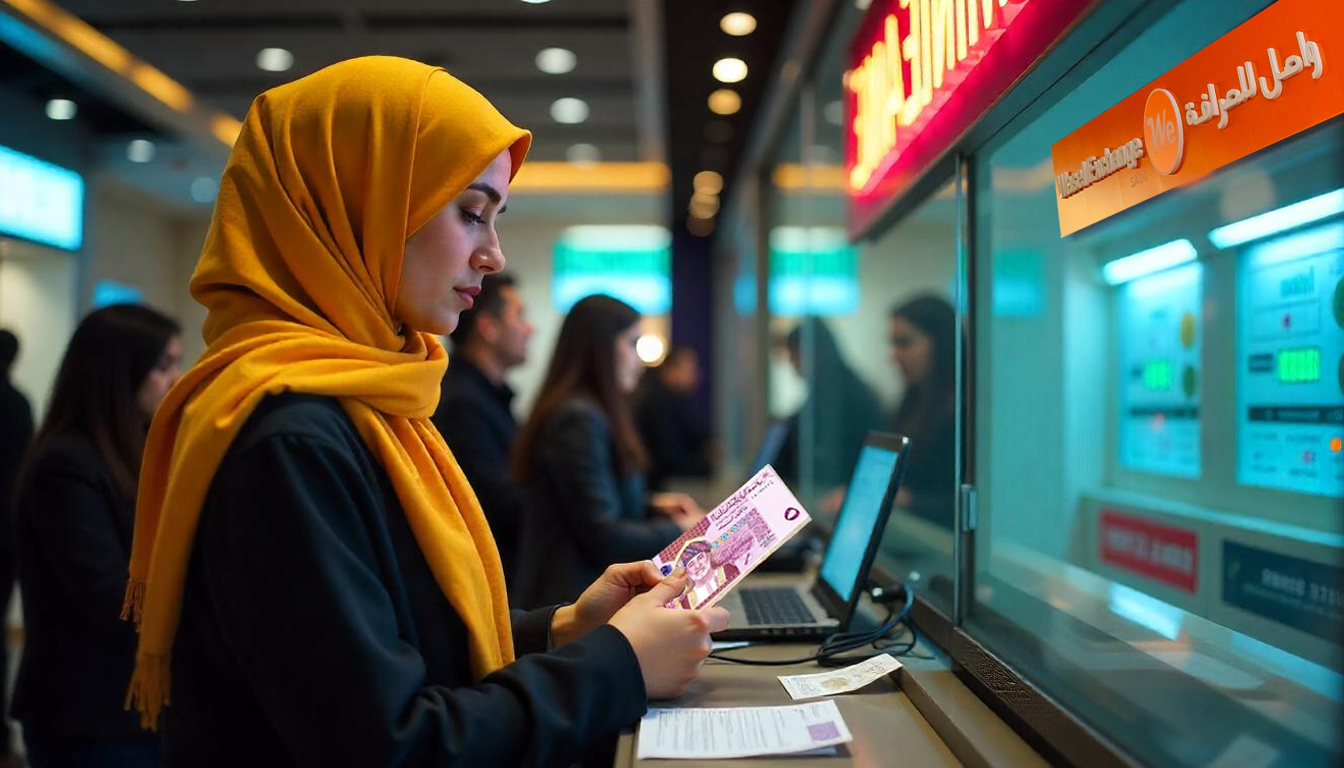
Customers can make personal remittances to their bank accounts and also permitted remittances for trade or other purposes up to a certain limit. Cash-to-cash transactions are also allowed subject to individual limits on number of remittances and the amount fixed by each receiver country.

Frequently Asked Questions
Customer has to produce their IDs. Accepted IDs are resident cards for expats, ID cards for nationals and passports for tourists.
For high-value remittance OMR 3000 and above, customers have to submit a declaration showing the source of funds and purpose of remittance. If the amount is tendered in cash, the customer has to produce a copy of the bank withdrawal slip as evidence of the source.
For high-value remittance OMR 3000 and above, customers have to submit a declaration showing the source of funds and purpose of remittance. If the amount is tendered in cash, the customer has to produce a copy of the bank withdrawal slip as evidence of the source.
For bank transfer, the customer has to provide the beneficiary name, bank name, branch name and account number.
Customers are expected to verify the beneficiary bank particulars, especially the account number, before tendering the cash.
Customers are expected to verify the beneficiary bank particulars, especially the account number, before tendering the cash.
This depends on country to country. For transfer to India, the beneficiary account is normally credited within four to twenty-four hours on normal working days.
Instant money transfers are also called cash pick-up or cash-to-cash transfers. The amount is sent in the name of the beneficiary, and the beneficiary can personally collect the amount in cash from an authorized agent.
The beneficiary name and ID number, if available, are required. After completing the transaction, the remitter will be given a unique number which must be passed to the beneficiary.
The beneficiary can approach the agent in the receiver country and receive cash by showing this unique number and valid ID. The remitter must ensure that the unique number is not shared with any third party.
The beneficiary can approach the agent in the receiver country and receive cash by showing this unique number and valid ID. The remitter must ensure that the unique number is not shared with any third party.
Both sale and purchase of foreign currencies are carried out at the branches subject to availability. Customers can tender OMR and request foreign currency or tender foreign currency and request Omani Rial.
There are certain limits for carrying cash to different countries. The applicable limit depends on the destination country and its customs regulations.
Passengers should check the latest declaration requirements before travelling and retain all supporting currency exchange documents.
Passengers should check the latest declaration requirements before travelling and retain all supporting currency exchange documents.
One should be aware of the limits for carrying currency into the particular country.
The traveller should also keep the currency exchange slip provided by the money exchange company or bank as proof of the source of the currency.
The traveller should also keep the currency exchange slip provided by the money exchange company or bank as proof of the source of the currency.
It is possible to cancel a remittance transaction only if the money has not yet been credited to or collected by the beneficiary.
The cancellation will be processed at the applicable exchange rate according to the company policy and service provider rules.
The cancellation will be processed at the applicable exchange rate according to the company policy and service provider rules.
NRE accounts are Non-Resident External accounts. Eligible remittances from abroad can be credited to these accounts. Savings and fixed deposit accounts can be opened subject to banking regulations.
NRO accounts are Non-Resident Ordinary accounts, normally used for crediting domestic income earned in India. Tax treatment is subject to applicable Indian laws and regulations.
NRO accounts are Non-Resident Ordinary accounts, normally used for crediting domestic income earned in India. Tax treatment is subject to applicable Indian laws and regulations.